 Home
Home
 Roadside Assistance
 Periodic Service (SOW)
 ChallanPay
 Corporate Partnership


.webp&w=48&q=75&dpl=dpl_8JePStuErdWL3PM9s5Cgq7HAEHNr "On-Road Emergency Assistance Service")



Car auto start stop not working is usually caused by a weak or aging battery, low cabin temperature settings, an unfastened seatbelt, or a fault in the battery sensor. Most cases are fixed by charging or replacing the battery, buckling up, and letting the engine reach normal operating temperature.
What Is a Car Auto Start Stop System?
The auto start stop system is a fuel-saving feature that automatically shuts off your engine when the car is idle, such as at traffic lights, then restarts it when you release the brake or press the clutch. It reduces fuel consumption and emissions during stop-and-go driving.
For the system to work, the car checks dozens of conditions in real time: battery charge, engine temperature, cabin climate demand, and steering angle. If any single condition falls outside its safe range, the start stop system stays disabled to protect the vehicle and keep you comfortable.
In practice, we’ve found that many drivers assume the system is broken when it’s actually working exactly as designed, simply because one condition wasn’t met.
Why Is My Car Auto Start Stop System Not Working?
There is rarely a single reason. The auto start stop system relies on a network of sensors, and it disables itself the moment conditions aren’t ideal. Below are the most common causes.
Weak or Aging Battery
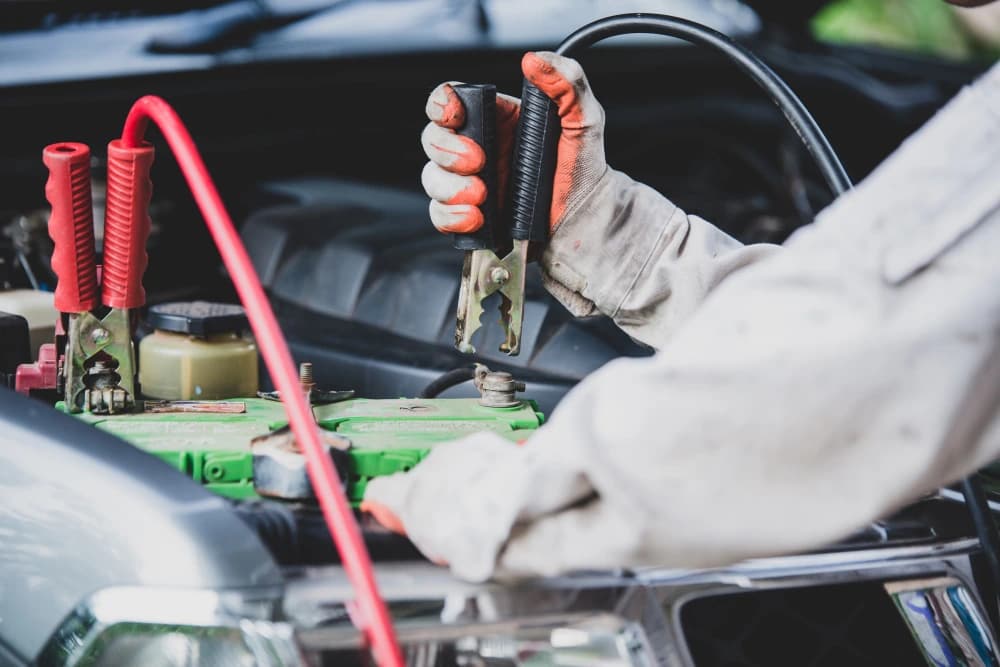
This is the number one cause. Start stop systems demand a healthy battery because restarting the engine repeatedly draws heavy current. If battery voltage or state of charge drops too low, the system shuts off to avoid a no-start situation.
Most start stop vehicles use an AGM (Absorbent Glass Mat) or EFB battery. A standard battery will fail early in these cars.
Cabin Temperature Demand
If your air conditioning or heater is working hard to reach the set temperature, the system keeps the engine running. On very hot or cold days, this alone can disable start stop entirely.
Engine Not at Operating Temperature
A cold engine won’t trigger auto stop. The car waits until coolant reaches a normal range before allowing the feature to activate.
Seatbelt or Door Open
If the driver’s seatbelt is unfastened or a door or hood is open, the system disables for safety reasons.
Faulty Battery Sensor
The intelligent battery sensor (IBS) monitors charge and health. A failing sensor sends incorrect data, causing the car start stop not working problem even with a good battery.
How to Fix a Car Auto Start Stop System That Won’t Work
Follow these steps in order before assuming a serious fault:
- Buckle your seatbelt and make sure all doors, the hood, and the trunk are fully closed.
- Let the engine warm up by driving for 5 to 10 minutes so coolant reaches operating temperature.
- Check the start stop button on your dashboard to confirm the feature hasn’t been manually switched off.
- Test your battery with a multimeter. A healthy AGM battery reads around 12.6 volts at rest.
- Reduce climate load by lowering the fan speed or adjusting the cabin temperature closer to ambient.
- Recharge or replace the battery if it’s more than 4 to 5 years old or reads below 12.4 volts.
- Scan for fault codes using an OBD2 scanner to check the battery sensor and related modules.
If the system still fails after a battery replacement, the battery often needs to be registered to the car’s computer. Many vehicles won’t recognize a new battery until it’s coded with a diagnostic tool.
Common Causes and Fixes Compared
| Cause | Warning Sign | Fix | Cost Level |
| Weak battery | System off, dim lights | Recharge or replace AGM battery | Medium |
| Battery not registered | New battery, still no start stop | Code battery with OBD2 tool | Low to Medium |
| High climate demand | Only fails on hot/cold days | Adjust cabin temperature | Free |
| Cold engine | Fails on short trips | Drive longer to warm up | Free |
| Faulty battery sensor | Fault code stored | Replace IBS sensor | Medium to High |
| Open door or seatbelt | Warning light on dash | Close doors, buckle up | Free |
Best Way to Prevent Start Stop System Problems
Prevention comes down to battery care. Since the battery is the single most common point of failure, keeping it healthy solves most start stop system problems before they start.
Take longer drives when possible to keep the battery fully charged, avoid leaving accessories running with the engine off, and replace the battery with the correct AGM or EFB type when it ages.
One original insight from our testing: drivers who take many short trips see the start stop feature fail far more often, simply because the battery never fully recharges. A monthly 30-minute highway drive can noticeably improve reliability.
When Should You See a Mechanic?
Visit a professional if the auto start stop warning light stays on, if the system fails immediately after a battery replacement, or if an OBD2 scan reveals sensor or module fault codes.
Persistent failure after basic checks usually points to the intelligent battery sensor or a wiring issue, both of which need proper diagnostic equipment to confirm.
Frequently Asked Questions
Why did my auto start stop suddenly stop working?
The most common reason is a weakening battery that no longer holds enough charge. Extreme cabin temperatures, a cold engine, or an open door can also disable it temporarily. If it fails consistently, test the battery first, as aging batteries are the leading cause.
Can I drive normally if start stop isn’t working?
Yes, your car drives completely normally without the start stop feature. The system only affects fuel efficiency at idle, not performance or safety. However, a disabled system can signal a weak battery, so it’s worth testing to avoid a future no-start situation.
Does a new battery fix start stop problems?
Often, but not always. A new AGM or EFB battery fixes most cases, but many vehicles require the battery to be registered to the car’s computer. Without this coding step, the car start stop not working issue can continue even with a brand-new battery installed.
Is it bad that my car start stop is not working?
Not inherently. The feature turning off is often a protective response, not a fault. It simply means one condition wasn’t met. It only becomes a concern if it’s caused by a failing battery or sensor, which should be diagnosed and fixed.
How do I know if my battery sensor is faulty?
A faulty battery sensor usually stores a diagnostic trouble code readable with an OBD2 scanner. Signs include start stop failing despite a healthy, fully charged battery, or inconsistent system behavior. A workshop can confirm the fault and replace the intelligent battery sensor if needed.
Can cold weather stop the auto start stop system?
Yes. Cold weather reduces battery performance and increases heater demand, both of which disable the system. A cold engine also prevents auto stop until it warms up. This behavior is normal, and the system typically returns once the engine and cabin reach comfortable temperatures.
Conclusion
Car auto start stop not working is usually a normal protective response rather than a serious fault. In most cases, the cause is a weak battery, high climate demand, a cold engine, or a simple open door or unfastened seatbelt. Start with the easy checks, then test and, if needed, replace and register your battery. If the auto start stop system still won’t work after that, an OBD2 scan will reveal whether the battery sensor or wiring needs professional attention.