 Home
Home
 Roadside Assistance
 Periodic Service (SOW)
 ChallanPay
 Corporate Partnership


.webp&w=48&q=75&dpl=dpl_AZ4GMg7AQz4PT5b1yRLjXUCtcMcq "On-Road Emergency Assistance Service")



Introduction
For bike riders, the freedom of the open road comes with an unavoidable reality: mechanical issues and unexpected situations can occur at any time. A sudden engine breakdown, a punctured tyre, running out of fuel, or facing an unsafe roadside environment can quickly turn a routine ride into a stressful experience. For daily commuters, delivery riders, touring enthusiasts, and casual riders alike, being stranded with a bike problem is not just inconvenient—it can also pose serious safety risks. This is why road side assistance for bike riders has become an essential support system rather than a luxury. Understanding how roadside assistance works and what situations it covers helps riders stay prepared instead of panicked.
This information-based guide provides a detailed breakdown of roadside assistance for bike riders, focusing on common scenarios such as breakdowns, tyre issues, fuel shortages, and essential safety steps. Rather than reacting in the moment, riders who understand these services can make smarter decisions, reduce risk, and get back on the road faster. By the end of this blog, you will clearly understand how roadside assistance supports bike riders, what to do in different emergency situations, and why preparation plays a critical role in rider safety and confidence.
Things Bike Riders Must Know Before Needing Road Side Assistance
Why Road Side Assistance Is Crucial for Bike Riders
Bike riders are more vulnerable on the road compared to car drivers. A minor issue that might be manageable in a car can become a serious safety concern on a two-wheeler. Road side assistance exists to bridge this vulnerability gap by providing immediate help when riders face mechanical or logistical issues. It ensures that riders are not left stranded in unfamiliar or unsafe environments.
Unlike cars, bikes have limited storage, fewer safety barriers, and less visibility during emergencies. Road side assistance offers professional intervention, reducing the need for risky self-repairs or unsafe waiting conditions. Understanding the importance of this service helps riders treat it as a proactive safety measure rather than an afterthought.
Common Scenarios That Require Bike Road Side Assistance
Bike riders commonly face issues such as engine failure, battery problems, punctured tyres, chain malfunctions, clutch issues, and fuel exhaustion. Environmental factors like extreme heat, rain, or poorly maintained roads can increase the likelihood of these problems.
Road side assistance services are designed to address these common scenarios quickly. Knowing which situations qualify for assistance allows riders to act decisively instead of wasting time attempting unsafe fixes. This awareness is especially important during long rides or travel through remote areas.
Road Side Assistance Is About Safety, Not Just Convenience
Many riders view roadside help as a convenience service, but its primary purpose is safety. A stalled bike on a busy highway or deserted road exposes riders to traffic risks, theft, and environmental hazards. Professional assistance minimizes exposure time and ensures safer resolution.
Understanding this safety-first role shifts how riders approach emergencies. Instead of pushing a bike long distances or attempting makeshift repairs, riders can prioritize personal safety and call for help immediately.
Preparation Matters More Than Reaction
The effectiveness of roadside assistance depends heavily on preparation. Riders who know emergency numbers, have active service coverage, and understand the process receive faster help. Those who search for solutions after an incident often face delays and added stress.
Preparation includes understanding service coverage, keeping contact details accessible, and knowing what information to provide during a call. This readiness significantly improves response time and outcome.
Location Awareness Is Critical
Accurate location sharing is essential for quick assistance. Riders should be familiar with using GPS, landmarks, or navigation apps to communicate their position clearly. Poor location details often cause delays.
Road side assistance works best when riders can describe their surroundings precisely. Understanding this requirement helps riders remain calm and focused during emergencies.
Common Bike Breakdowns and How Road Side Assistance Helps
Engine Breakdowns and Mechanical Failure
Engine breakdowns are among the most serious issues bike riders face. Overheating, oil leaks, electrical failures, or internal component damage can cause sudden stoppage. Attempting to restart or ride a damaged engine can worsen the problem.
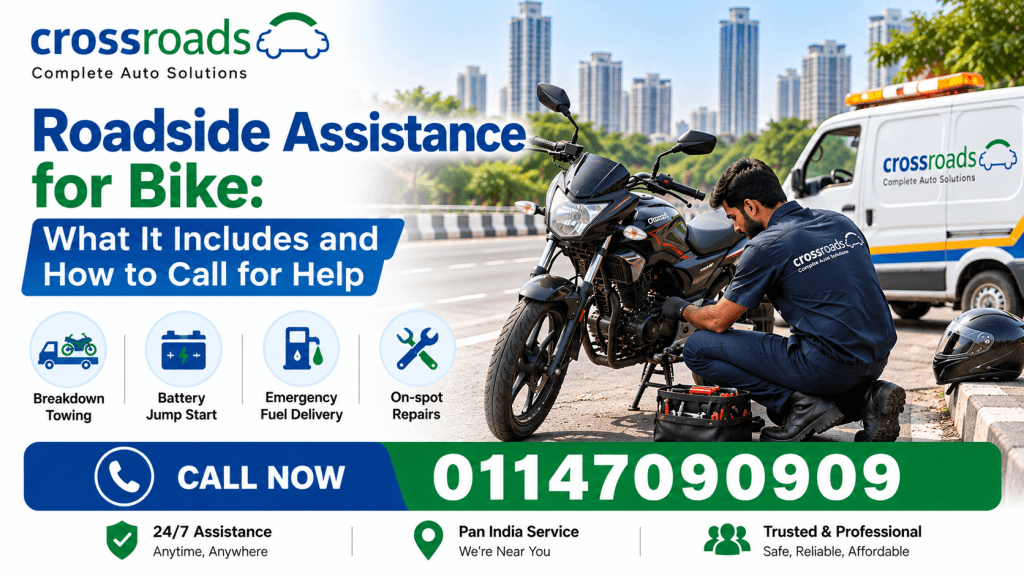
Road side assistance provides professional evaluation at the spot. Depending on the issue, technicians may perform basic fixes or arrange safe towing to a service center. This prevents further damage and protects rider safety.
Battery and Electrical Issues
Modern bikes rely heavily on electrical systems. Battery failure, faulty wiring, or starter motor issues can prevent a bike from starting. These problems often occur without warning, especially in extreme weather conditions.
Road side assistance technicians can perform jump-starts, battery checks, or temporary fixes. If on-site repair is not possible, towing services ensure the bike reaches a repair facility without unnecessary delays.
Clutch, Chain, and Transmission Problems
Clutch cable snaps, chain issues, and transmission malfunctions are common in high-usage bikes. These issues make riding unsafe or impossible.
Road side assistance ensures the bike is safely transported rather than ridden in compromised condition. This reduces the risk of accidents caused by sudden loss of control.
Overheating and Cooling System Failures
In traffic-heavy or hot environments, bikes may overheat due to coolant issues or radiator problems. Continuing to ride can cause engine damage.
Road side assistance helps by advising riders to shut down the engine, inspecting visible issues, and arranging recovery if needed. Professional guidance prevents costly repairs later.
Tyre Problems and Road Side Assistance for Bike Riders
Punctured Tyres and Air Leaks
Punctured tyres are one of the most frequent roadside issues for bike riders. Nails, glass, sharp stones, or worn tyres can cause sudden air loss. Riding on a flat tyre is dangerous and can damage rims.
Road side assistance services often include puncture repair or tyre replacement support. If immediate repair is not possible, towing ensures the bike is moved safely. This eliminates the need for risky roadside fixes.
Tubeless vs Tube Tyre Assistance
Different tyre types require different solutions. Tubeless tyres may allow temporary sealing, while tube tyres often require replacement. Riders may not carry necessary tools or spares.
Road side assistance technicians are equipped to handle both types. Understanding this support helps riders avoid attempting incorrect repairs that could lead to accidents.
Tyre Burst and Severe Damage
In cases of tyre bursts or sidewall damage, riding further is extremely unsafe. Immediate assistance is essential.
Road side assistance prioritizes safety by arranging recovery and preventing further riding. This protects both the rider and surrounding traffic.
Fuel-Related Emergencies for Bike Riders
Running Out of Fuel Unexpectedly
Fuel exhaustion can occur due to misjudged distance, faulty fuel gauges, or long traffic delays. Being stranded without fuel can be stressful, especially in isolated areas.
Road side assistance often includes emergency fuel delivery. This service allows riders to reach the nearest fuel station without pushing the bike or seeking unsafe help.
Fuel System Issues and Contamination
Sometimes fuel-related issues are not about quantity but quality. Contaminated fuel or clogged fuel lines can stop a bike abruptly.
Road side assistance helps assess whether fuel delivery or towing is required. Professional handling prevents further engine damage.
Safety Considerations During Fuel Emergencies
Handling fuel improperly can lead to fire hazards. Road side assistance ensures fuel is delivered and handled safely, reducing risk.
Understanding this safety aspect reinforces the value of professional help during fuel emergencies.
Essential Safety Steps for Bike Riders During Roadside Emergencies
Moving to a Safe Location
If possible, riders should move their bike to the side of the road, away from traffic. Hazard lights or indicators should be used if available.
Road side assistance operators often guide riders on immediate safety steps while help is dispatched. Following these instructions reduces accident risk.
Wearing Protective Gear While Waiting
Riders should keep helmets and reflective gear on while waiting for assistance. Visibility is critical, especially at night or in poor weather.
Road side assistance response time varies, and maintaining visibility protects riders during the wait.
Avoiding Unsafe Repairs
Attempting complex repairs without tools or expertise can worsen damage or cause injury. Riders should avoid dismantling parts unless trained.
Road side assistance eliminates the need for risky DIY fixes, ensuring professional handling.
Communicating Clearly With Assistance Providers
Clear communication about the issue, location, and bike condition helps technicians prepare appropriately. Riders should stay calm and provide accurate details.
Effective communication speeds up resolution and ensures correct support arrives.
Staying Alert to Surroundings
While waiting, riders should remain aware of traffic, weather, and personal safety risks. Avoiding isolated or poorly lit areas when possible is important.
Road side assistance reduces waiting time, but rider vigilance remains essential.
How Road Side Assistance Works for Bike Riders
Requesting Assistance
Most roadside services operate through phone calls or apps. Riders provide details such as bike type, issue, and location.
Understanding the request process ensures quicker service and reduces confusion during emergencies.
Assessment and Dispatch
Once a request is logged, the service assesses the issue and dispatches the appropriate support—technician, fuel delivery, or towing.
This structured approach ensures the right help arrives efficiently.
On-Site Support or Recovery
Depending on the problem, assistance may involve on-site repair or safe transportation to a service center.
This flexibility allows riders to resume their journey or reach professional repair facilities safely.
Follow-Up and Resolution
Good roadside services ensure the issue is resolved satisfactorily and may provide guidance for preventing recurrence.
This completes the assistance cycle and improves rider confidence.
Who Benefits Most From Bike Road Side Assistance
Daily Commuters
Frequent riders face higher exposure to wear and tear. Road side assistance ensures daily routines are not disrupted by emergencies.
Long-Distance and Touring Riders
Remote routes increase risk and reduce access to help. Road side assistance provides peace of mind during long journeys.
New and Inexperienced Riders
New riders may lack mechanical knowledge. Professional assistance prevents mistakes and improves safety.
Delivery and Commercial Riders
Downtime affects income. Road side assistance minimizes delays and protects livelihood.
Why Road Side Assistance Is a Smart Investment for Bike Riders
Reduces Stress and Uncertainty
Knowing help is available reduces panic during emergencies. Riders can focus on safety instead of problem-solving under pressure.
Prevents Further Damage
Professional handling prevents minor issues from becoming major repairs.
Enhances Personal Safety
Reduced roadside exposure lowers accident and theft risk.
Supports Confident Riding
Prepared riders enjoy their journeys more, knowing support is available.
Conclusion
Road side assistance for bike riders plays a vital role in managing breakdowns, tyre issues, fuel emergencies, and safety risks. As bikes become essential for commuting, work, and travel, the need for reliable roadside support continues to grow. Understanding how these services work, what situations they cover, and how to respond during emergencies empowers riders to stay calm, safe, and informed.
Preparation, awareness, and professional assistance together form the foundation of rider safety. By recognizing the importance of roadside assistance and following essential safety steps, bike riders can turn unexpected disruptions into manageable situations. In an unpredictable road environment, roadside assistance is not just help—it is confidence, protection, and peace of mind for every rider