 Home
Home
 Roadside Assistance
 Periodic Service (SOW)
 Corporate Partnership


.webp&w=48&q=75&dpl=dpl_EsF4UhNapCQ5AcrJXqaCryhRHUpZ "On-Road Emergency Assistance Service")



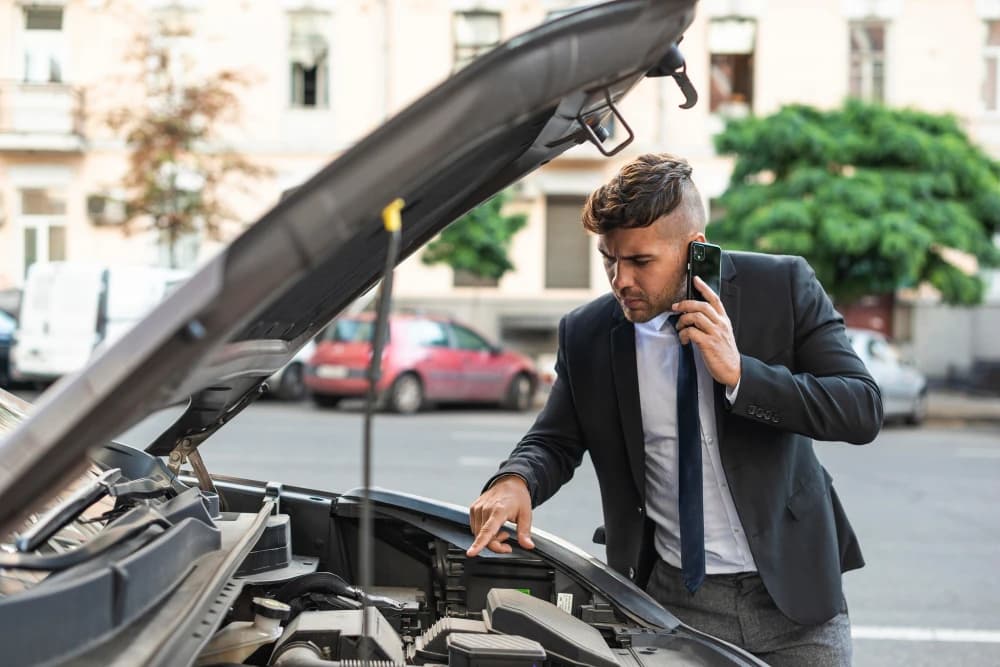
Picture this you are cruising down the NH48 towards Jaipur, music playing, windows down, and then suddenly your engine sputters and dies. Your car grinds to a halt right in the middle of a busy national highway. Your heart starts racing. What do you do next?
A car breakdown in the middle of the road in India is more common than most people think. Whether it’s a flat tyre, a dead battery, an overheated engine, or simply running out of fuel, breakdowns can happen to anyone, anytime, on any road. The real difference between a stressful disaster and a manageable inconvenience is knowing exactly what steps to take and having the right roadside assistance in India on speed dial.
This guide walks you through everything you need to do, step by step, so that the next time your car lets you down, you won’t.
Step 1: Stay Calm and Move Your Vehicle Safely
The moment you realize something is wrong, resist the urge to panic. Your first job is to protect yourself and your passengers from oncoming traffic.
If the car is still moving, gently steer it toward the left side of the road the shoulder or the emergency lane, if available. Avoid braking suddenly, as this can startle vehicles behind you. Once you are safely off the main lane, turn on your hazard lights immediately. This signals to other drivers that your vehicle is stationary and in distress.
On Indian highways, especially expressways like the Yamuna Expressway or Delhi-Mumbai Expressway, the emergency lane is strictly meant for situations like this. Use it without hesitation.
What If the Car Stops Suddenly Mid-Road?
If your vehicle dies without warning in the middle of a lane, keep your hazard lights on, stay inside the car with your seatbelt fastened, and call for help right away. Do not attempt to push the car by stepping out onto a busy highway it’s far too dangerous.
Step 2: Warn Other Drivers on the Road
Once your car is stationary and hazard lights are on, the next priority is making your vehicle visible to traffic, especially at night or in low-visibility conditions like fog or rain.
Place your reflective warning triangles at least 50 to 100 meters behind your vehicle. Most cars sold in India come with a basic emergency triangle, but many drivers forget to keep one. If you don’t have a triangle, pop your boot open a raised boot also works as a visual signal to approaching drivers.
Avoid standing on the traffic side of your car. If you step out, always exit from the passenger side, away from moving vehicles, and stand behind the guard rail or as far off the road as possible.
Step 3: Identify the Problem (Without Making It Worse)
Once you are safely positioned, try to get a rough idea of what went wrong. You don’t need to be a mechanic just look for obvious signs.
Check if the engine temperature gauge is in the red (overheating), look at your fuel indicator, listen for any unusual sounds when you try to restart, and glance at your tyres from a distance to see if one appears flat. These basic checks will help when you call for roadside assistance in India, so the technician knows what to bring.
Common Causes of Car Breakdown on Indian Highways
Tyre punctures are by far the most frequent cause of breakdowns on Indian roads, followed by battery failure, overheating, fuel exhaustion, and electrical faults. In summer months, engine overheating spikes significantly, especially on long stretches like the Delhi-Agra or Mumbai-Pune highway.
Step 4: Call for Professional Roadside Assistance
This is the most important step. Do not attempt to fix a major mechanical problem on a busy highway by yourself. The risk of injury is simply too high.
Save the number of a trusted 24/7 roadside assistance provider before you even start your journey. In India, one of the most reliable options is Crossroads Helpline, reachable at 01147090909. They are India’s trusted 24/7 roadside assistance company, offering emergency support for cars and bikes across major cities and highways nationwide.
Their services cover virtually every situation you might face on the road, including tyre puncture assistance, battery jump-start, fuel delivery, towing, key lockout help, and instant car repair. With over 16,50,000 services delivered and a network spanning the entire country, Crossroads has the kind of reach and reliability you want when you are stranded on a highway far from the nearest town.
Why Choose a Dedicated Roadside Assistance Service?
Many Indian drivers assume they can rely on their car manufacturer’s warranty helpline or a local mechanic they find on Google Maps. While those options exist, a dedicated provider like Crossroads Helpline has trained technicians who respond much faster, often within 20 to 30 minutes, and they come equipped to handle the situation on the spot — not just tow you to a garage and leave.
Step 5: Contact Your Insurance Provider if Needed
If your car is severely damaged, say, from an accident or a major engine failure you will also need to inform your motor insurance provider. Most comprehensive car insurance policies in India include some form of roadside assistance or towing reimbursement.
Keep your policy documents in the car or saved as a PDF on your phone. When you call your insurer, note down the claim reference number and ask about the documentation they will need. A breakdown on the highway can sometimes lead to an insurance claim, especially if repairs are extensive.
Crossroads Helpline also offers motor insurance services, making it easy to manage both emergency assistance and insurance needs through a single trusted provider.
Step 6: Keep Yourself and Your Passengers Safe While Waiting
While you wait for help to arrive, there are a few things to keep in mind. If it’s daytime and you are in a safe spot away from traffic, you can wait outside the car in the shade. But if you are on a fast-moving expressway or it’s nighttime, staying inside the car with seatbelts on is actually safer.
Keep the hazard lights on throughout. If you have children or elderly passengers, ensure they are comfortable and reassured. Have water and snacks in your car if possible. Long waits on remote highway stretches in India can be uncomfortable, especially during summer when temperatures can exceed 40°C.
Avoid accepting help from strangers you cannot verify, particularly in isolated areas. Stick with your pre-arranged roadside assistance call.
Step 7: Document Everything Before the Tow
Before your car gets towed to a garage, take photos of its current position, any visible damage, and the surroundings. Note the exact location the nearest milestone marker number, the highway name, and the direction you were travelling. This information is useful for insurance claims and also helps the recovery crew locate you accurately.
Once help arrives from your roadside assistance team, ask for a receipt or acknowledgment of the service rendered. This is especially important if you are a plan member, so the visit gets logged against your subscription.
How to Avoid a Car Breakdown on Indian Highways — Prevention Tips
The best breakdown is the one that never happens. Before any long highway journey, run through this basic checklist: get your tyres inflated to the correct PSI, check engine oil and coolant levels, test your battery if it’s older than three years, carry a spare tyre in good condition, and make sure your fuel tank is at least half full before leaving city limits.
Consider investing in an annual roadside assistance membership. Crossroads Helpline offers affordable plans including options for individuals, families, and even lifetime memberships — all covering pan-India emergency support. Plans typically include unlimited service calls for tyre punctures, battery jump-starts, fuel delivery, and more.
Frequently Asked Questions
Q1. What should I do immediately if my car breaks down in the middle of the road in India?
Turn on your hazard lights right away and steer the car to the left shoulder safely. Then call a 24/7 roadside assistance number like Crossroads Helpline at 01147090909 to get professional help quickly.
Q2. Is there a number I can call for roadside assistance in India on highways? Yes. Crossroads Helpline (01147090909) operates round the clock across India and provides services like towing, tyre change, battery jump-start, and fuel delivery on highways and city roads.
Q3. Can I push my broken-down car on an Indian highway?
No — this is extremely dangerous on a busy highway. Keep the car stationary, hazard lights on, and wait for professional assistance to arrive rather than pushing it manually.
Q4. Will my car insurance cover a highway breakdown in India?
Most comprehensive insurance policies include towing or roadside assistance as an add-on, but coverage varies. Call your insurer immediately after the breakdown to understand your entitlements and start the claim process.
Q5. How long does roadside assistance typically take to arrive in India? Response times vary by provider and location. Crossroads Helpline typically dispatches a technician within 20 to 30 minutes in cities and major highway corridors, though remote locations may take a little longer.
Conclusion: Be Prepared Before You Hit the Road
A car breakdown in the middle of the road in India is a stressful experience, but it doesn’t have to be a dangerous or helpless one. The steps are simple: move to safety, warn other drivers, identify the issue, and call for reliable roadside assistance. Everything after that is just waiting for the pros to arrive.
The smartest thing you can do right now before your next highway trip is to save Crossroads Helpline in your contacts and explore their membership plans. With 24/7 pan-India coverage, fast response times, a 4.5+ Google rating, and over 3,50,000 active subscribers, they are arguably the most dependable roadside assistance service you can have in your corner. You can reach them at 01147090909 or visit their website to find a plan that suits your needs.
Drive safe — and drive prepared.